

Table of Contents
- Quick Comparison: Best Smart Pet Products 2026
- Smart Pet Feeder Reviews: What Actually Works
- Benefits of Automated Pet Products for Busy Owners
- How to Choose Smart Pet Gadgets: A Practical Framework
- Interactive Toys and Enrichment Tech for Dogs and Cats
- Travel and On-the-Go Smart Pet Gear
- What Competitors Miss: Privacy, Maintenance, and E-Waste
- Conclusion: Picking the Right Smart Pet Products for 2026
- Frequently Asked Questions
Last Updated: September 17, 2026
Quick Comparison: Best Smart Pet Products 2026
The best smart pet products 2026 list starts with tools that solve real problems, not gadgets that look good in a demo. NextGen built its pet collection around that idea: scheduled feeders, toys that keep working after you leave, and travel gear that fits in a backpack pocket.
| Product | Price | Best For | Standout Feature |
|---|---|---|---|
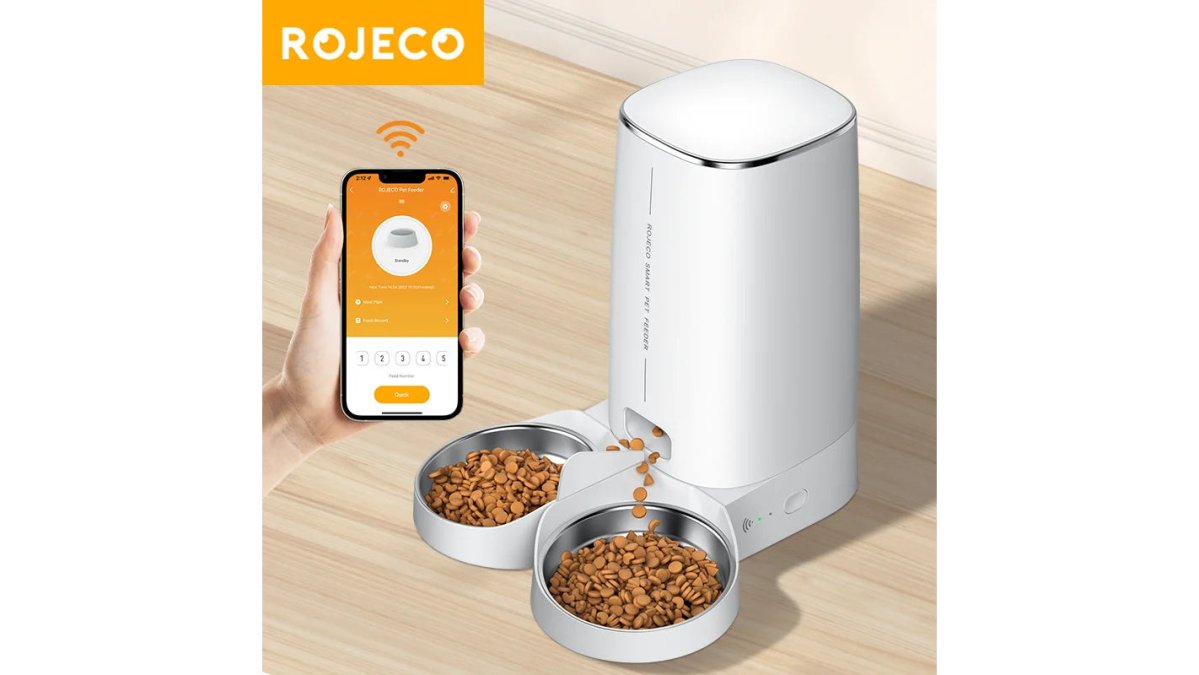
| ROJECO Automatic Cat Feeder | $75.00 | Scheduled meals for cats and small dogs | WiFi app control, 10 meals per day |
| Interactive Rolling Ball Toy | $7.50 | Bored cats home alone | Rechargeable, obstacle-avoiding mode |
| USB Rechargeable Toy Ball with Tail | $8.75 | Dogs and cats that chew | Chewable design, harness clip |
| 3-in-1 Travel Bottle | $19.00 | Walks and road trips | 300ml water, 100g food, waste bags |
| NextGen 2-in-1 Water Bottle | $7.75 | Quick errands and hikes | Stainless steel, foldable silicone bowl |
| Dog Boots, 4-Piece Set | $7.00 | Hot pavement and rain | Waterproof, anti-slip, sizes S to XL |
Smart Pet Feeder Reviews: What Actually Works
A smart pet feeder dispenses measured portions of dry food on a set schedule, usually via a phone app or physical button. Its one real job: feeding your pet on time when you can't.

ROJECO Automatic Cat Feeder: Best for Scheduled Meals
The ROJECO feeder handles the schedule problem completely. It holds dry food and you set up to 10 meals per day in the app, with portions of about 6 grams each. Setup takes about 15 minutes: download the ROJECO app, connect over 2.4GHz WiFi, set your plan. Four AA batteries provide backup, so a power cut doesn't mean a missed meal.
Benefits of Automated Pet Products for Busy Owners
Automated pet products solve a scheduling problem, not a laziness problem. Owners who work long shifts, travel, or live alone get the most out of them because there's no second person to cover a missed meal. But the real case for automation is narrower than most lists admit.
The benefits that actually hold up
- Portion consistency you can audit. A feeder that logs each dispense event gives you a record. If your vet asks whether your cat gained weight from overfeeding or a thyroid issue, you have data instead of a guess.
- Schedule stability during disruptions. The win isn't skipping a 6am wake-up; it's that a power outage, late shift, or delayed flight doesn't cascade into a missed meal, provided the unit has battery backup. Check for AA or rechargeable backup before you buy; many budget feeders advertise app control but ship without it.
- Reduced resource guarding in multi-pet homes. When food arrives on a fixed schedule from a machine rather than a person, the human stops being the gatekeeper. Owners of two-cat households commonly report less crowding at the bowl within two weeks.
- Remote verification, not remote control. The app's real value is the log and the alert, not pressing a button from your desk. If you rely on remote feeding because you're often away, the feeder is compensating for a care gap, not solving one.
The benefits that get oversold
- "Reduces separation anxiety." A feeder doesn't treat anxiety; it removes one trigger (unpredictable meals). If your pet shows destructive behavior, pacing, or vocalizing when you leave, talk to your vet about a behavior consult.
- "Keeps pets entertained all day." Interactive toys provide enrichment in bursts, a rolling ball holds a cat's attention for minutes, not hours. Enrichment is cumulative across toys, scratching surfaces, window perches, and human interaction.
- "Saves money on food." Measured portions reduce waste, but savings are modest. Don't buy a $75 feeder to save $4 a month in kibble.
What the second-order benefit actually is
The benefit most guides skip is cognitive load: you stop running a mental checklist every time you leave the house. For a single owner with a demanding job, that's worth more than any spec-sheet feature, and it's the hardest to quantify, which is why it rarely appears in comparison tables.

A quick reality check before you buy
Automation works when your routine is the problem, not when the problem is the pet's health, behavior, or your availability over weeks. A feeder covers hours, not days. If you're regularly away more than 24 hours, the answer is a pet sitter or boarding, with the feeder as backup rather than replacement.
How to Choose Smart Pet Gadgets: A Practical Framework
Choosing smart pet gadgets comes down to three questions: does it solve a problem you actually have, will it still work in a year, and what does it cost to keep running?
Here's a framework that filters out the noise.
| Problem | What to Look For | Product Type |
|---|---|---|
| Missed meals | App scheduling, battery backup | Automatic feeder |
| Boredom while you're out | Rechargeable, self-directed play | Interactive ball toy |
| Long walks, no water source | Built-in bowl, leak-proof seal | Travel bottle |
| Hot pavement | Waterproof, anti-slip sole | Dog boots |
Interactive Toys and Enrichment Tech for Dogs and Cats
Interactive toys matter most for pets left alone during work hours: self-directed play reduces destructive behavior and separation anxiety.

Travel and On-the-Go Smart Pet Gear
Travel gear earns its place by removing the need to carry three separate items. The Dog Water Cup Three-in-One at $19.00 holds 300ml of water, 100g of food, and a roll of waste bags in one bottle. The dispensing button locks so it won't leak in a bag, the water passes through a built-in filtration system, and it comes in nine colors.
What Competitors Miss: Privacy, Maintenance, and E-Waste
Three costs get left off almost every smart pet product list: data privacy, long-term maintenance, and what happens to the device when it dies. These determine whether a smart pet product is still worth owning in year three.
ROJECO Automatic Cat Feeder Pet Smart →
Data privacy and cybersecurity
App-connected feeders, cameras, and trackers collect more than most owners realize: feeding times, usage patterns, sometimes audio, and for GPS collars, continuous location history. That data lives on a vendor's servers, so the vendor's security posture is part of your pet's safety. What to check before you buy:
- Account requirements. A device that forces an account for basic offline functions collects data it doesn't need. Prefer devices that work locally and only require an account for remote features.
- Permission scope. A feeder app requesting contacts, microphone, or photo library access is a red flag. Limit location to "while using" unless it's a GPS tracker, where background location is the point.
- Encryption in transit. Look for HTTPS on app traffic and, where documented, encryption at rest. If the privacy page doesn't mention encryption, assume it isn't a priority.
- Default credentials. Change the default password on any device that ships with one, the most common cause of a compromised home camera.
- Firmware updates. A vendor with no firmware update in two years isn't patching. Check the app's release notes before you commit.
Long-term maintenance and subscription costs
The sticker price is the smallest number in the total cost of ownership. The recurring costs are where smart pet products quietly get expensive.
- Consumables. Feeder desiccant packs, fountain carbon filters, and grooming brush heads all have replacement intervals, often monthly. Add those to your budget before comparing two feeders on price alone.
- Subscription tiers. Cloud storage for cameras, GPS history, and health analytics are frequently gated behind monthly plans. A $40 camera with a $6 monthly plan costs $112 in year one; a $90 camera with local storage and no subscription costs $90. Run the three-year math.
- Batteries and charging. Rechargeable devices trade battery cost for charging routine; AA devices trade routine for recurring cost. Pick the one that matches how you maintain things.
- Repairability. Check whether the battery is user-replaceable and whether the vendor sells parts. A sealed unit with a non-replaceable lithium battery has a fixed lifespan.
Smart home ecosystem compatibility
Most smart pet product reviews treat app control as the finish line. It isn't, the question is whether the device talks to the rest of your home.
- Voice assistants. Check which platforms are supported and which functions are exposed. A feeder that reports its status by voice is useful; one that only triggers a manual feed by voice is a novelty.
- Automation hubs. For hub-based smart homes, look for devices that expose triggers and conditions, not just on/off commands. A feeder that triggers a camera recording when it dispenses beats one that can't.
- WiFi band. Most budget smart pet devices connect on 2.4GHz only. If your router broadcasts one combined network name, split the bands in router settings before setup. This is the most common setup failure, and it isn't a defective device.
- Local vs. cloud control. Devices that run a local schedule without internet are more resilient than cloud-dependent ones. If your internet goes down, a cloud-only feeder stops feeding.
E-waste and sustainability
Rechargeable toys and WiFi feeders contain lithium batteries that degrade, and plastic housings are rarely recycled. The environmental case for buying fewer, better devices is also the financial case.
- Prefer standard charging. USB-C is the common standard. Proprietary cables become e-waste the moment the cable is lost.
- Prefer replaceable batteries where the form factor allows. A toy that takes a standard rechargeable AA can last years; a sealed toy cannot.
- Check for take-back programs. Some manufacturers accept end-of-life devices for recycling. Otherwise use a local e-waste drop-off, lithium batteries should never go in household waste.
- Buy for the lifespan, not the launch. A $75 feeder lasting five years generates less waste and costs less per year than three $30 feeders that fail in eighteen months.
Conclusion: Picking the Right Smart Pet Products for 2026
The hardest part of buying smart pet gear isn't finding options, it's predicting which ones you'll still use in six months. Most failures come down to a mismatch between the product and your routine, not a bad product.
Frequently Asked Questions
Are smart pet feeders worth the investment for busy owners?
They can be, especially if you work long hours or travel. The ROJECO Automatic Cat Feeder ($75) supports 10 meals per day with portions from 6 grams, controlled through a WiFi app. For owners who need consistent feeding schedules, this removes the daily worry of rushing home. Just note it only works with dry food 4-12 mm in diameter and requires 2.4G WiFi, not 5G.
What features should I look for in smart pet products?
Focus on three things: connectivity, durability, and whether the product solves a recurring problem. For feeders, check portion control and app scheduling. For toys, look at battery life and material safety. The ROJECO feeder uses Plastic, which handles daily use. Interactive toys like the USB rechargeable ball use food-grade ABS and silicone wrap for bite resistance. Skip products that require 5G WiFi or have unclear material specs.
How do smart pet products improve animal welfare?
They address consistency and mental stimulation. Automated feeders like the ROJECO model deliver meals on a fixed schedule, which helps pets with digestive routines. Interactive toys simulate prey movement, keeping indoor cats active while you are away. The key is that these products reduce gaps in care, not replace your attention. A feeder handles lunch; it does not replace playtime or vet visits.
Are smart pet products safe for my pets?
Safety depends on materials and design. Look for food-grade ABS, stainless steel, and silicone. The ROJECO feeder uses Plastic and only supports dry food 4-12 mm to prevent jams. Interactive toys like the rolling ball use food-grade ABS with a soft silicone wrap. Avoid products with exposed wiring or small detachable parts. Always supervise initial use, especially with heavy chewers.
Which smart pet gadgets are most popular for busy pet owners?
Automated feeders and interactive toys top the list. The ROJECO Automatic Cat Feeder handles scheduled meals and remote app control. For enrichment, the USB rechargeable interactive ball and the automatic rolling ball with faux tail keep cats and dogs occupied. Portable options like the 3-in-1 water bottle with waste bag compartment ($19) solve on-the-go needs. Popularity tracks one thing: products that fill a gap when you are not home.