

Table of Contents
- Best Non Toxic Pet Products 2026: Quick Comparison
- Safe Materials for Dog Toys and Chews
- Non-Toxic Pet Grooming Supplies for a Healthier Coat
- How to Identify BPA-Free Pet Products
- Top Non Toxic Pet Products for Hydration and Travel
- Third-Party Certifications and Label Transparency
- Budget-Friendly Non-Toxic DIY and End-of-Life Disposal
- Conclusion: Choosing the Best Non Toxic Pet Products for 2026
- Frequently Asked Questions
Last Updated: October 3, 2026
Best Non Toxic Pet Products 2026: Quick Comparison
Most pet owners assume a toy is safe because it sits on a store shelf. That assumption quietly fails. A quick scan of product labels often turns up synthetic dyes, phthalates, and mystery plastics that shed when a dog chews.
We built this list around one rule: if we can't confirm what a product is made from, it doesn't make the cut. That means food-grade silicone, stainless steel, and natural fibers over vague "plastic" labels.
Below, we break down our top picks across hydration, grooming, and travel, plus a framework for spotting BPA-free pet products before you buy.
| Product | Price | Material | Best For |
|---|---|---|---|
| NextGen 2-in-1 Stainless Steel Pet Water Bottle | $7.75 | Stainless steel + food-grade silicone | Everyday walks |
| Dog Water Cup 3-in-1 | $19.00 | Plastic with filtration | Hikes and day trips |
| Portable 3-in-1 Water Bottle | $8.00 | ABS+PC | Budget travel |
| Self-Cleaning Slicker Brush | $15.00 | Gentle bristles | Coat health |
| Disposable Diaper Pad | $26.00 | Absorbent layered pad | Senior pets |
How We Evaluated Non Toxic Pet Products
We scored every item on three factors: material transparency, contact safety, and durability. Any product with an unclear material listing was excluded, no exceptions.

A common mistake is trusting the word "natural" on packaging. That term has no legal definition for pet products, so it tells you nothing about what's actually inside. We relied on declared materials instead, like the stainless steel and food-grade silicone found in our top hydration pick.
Safe Materials for Dog Toys and Chews
Safe materials for dog toys come down to a short list: natural rubber, food-grade silicone, and untreated cotton or hemp. Anything else needs scrutiny, and the reason is mechanical, not just chemical. A toy is a delivery system.
Here is how the main categories actually behave:
- Natural rubber. Harvested from the rubber tree, it flexes and rebounds instead of shattering. It is the closest thing to a chew-proof soft material, which is why it holds up to power chewers better than thermoplastic alternatives. Look for "natural rubber" or "rubber tree" on the label, not just "rubber."
- Food-grade silicone. Chemically inert, heat-stable, and free of the plasticizers that make vinyl soft. It does not leach the way softened PVC can. The trade-off is that thin silicone tears, so it suits fetch and tug more than aggressive chewing.
- Untreated cotton and hemp. Plant fibers with no dye bath and no finish. They are safe to mouth but not to swallow, so they belong in tug and fetch play under supervision, not in a crate.
- Wool and felt. Naturally flame-resistant and dyeable with plant pigments, but only safe when the dye is disclosed. "Assorted colors" with no dye source is a red flag.
Heavy chewers destroy soft toys fast, and when they do, they swallow whatever the toy is made of. That is why material matters more than shape or squeaker.
Watch for these red flags:
- Synthetic dyes that bleed when wet. If color runs onto a paper towel, it can run onto gums.
- Phthalate-softened plastics with a strong plastic smell. Phthalates are added to make rigid PVC flexible, and they are the additive most associated with endocrine concerns in pets.
- Painted surfaces that chip under pressure. Paint is a coating, not a material, and it can hide whatever is underneath.
- BPA in hard polycarbonate parts. BPA is an industrial chemical used in some hard plastics, and it can leach when the material heats up or breaks down.
- "Genuine leather" chews. Chrome tanning uses heavy metals, and the residue stays in the hide.
If your dog is a power chewer, size up. A toy that is too small becomes a choking risk the moment it cracks. A good rule is to pick a toy wider than your dog's muzzle so it cannot be swallowed whole.
For a deeper verification layer, see the certification section below. A toy that carries a recognized textile or material certification has been tested by a body other than the seller, which is the strongest signal you can get without a lab.
Non-Toxic Pet Grooming Supplies for a Healthier Coat
Non-toxic pet grooming supplies should be free of synthetic fragrance and parabens, since pets absorb what touches their skin. Grooming tools matter as much as shampoos here.
Our pick is the Self-Cleaning Slicker Brush at $15.00. The one-click bristle retraction drops hair instantly, so you're not picking fur out by hand. The gentle bristles are built to detangle without scraping skin, which matters for pets with sensitive coats.
Regular brushing does more than tidy fur. It spreads natural oils and boosts circulation, both of which support a healthy coat over time. For pets prone to skin irritation, fewer harsh chemicals in their routine can mean a lower toxic load overall.
How to Identify BPA-Free Pet Products
Identifying BPA-free pet products means checking the recycling code and the material listing, not just the marketing badge. BPA is an industrial chemical used in some hard plastics, and it can leach when material heats up or breaks down.
Here's the practical test:
- Look for a recycling code of 1, 2, 4, or 5. These are generally considered safer plastics.
- Avoid code 7, which often signals polycarbonate and potential BPA content.
- Check for "BPA-free" printed near the material line, not just on a sticker.
- Prefer stainless steel or food-grade silicone for anything holding water or food.
Our NextGen 2-in-1 Stainless Steel Pet Water Bottle sidesteps the plastic question entirely. Stainless steel and food-grade silicone don't carry the same leaching concerns as polycarbonate, and the listing confirms both materials.
Top Non Toxic Pet Products for Hydration and Travel
For travel hydration, consider the NextGen 2-in-1 Stainless Steel Pet Water Bottle at $7.75. It pairs a corrosion-resistant steel flask with a foldable silicone bowl, so you skip carrying a separate dish.

The leak-proof sealing lock keeps water out of your backpack and car seats. At 285ml, it fits bike cages and stroller pockets without weighing you down.
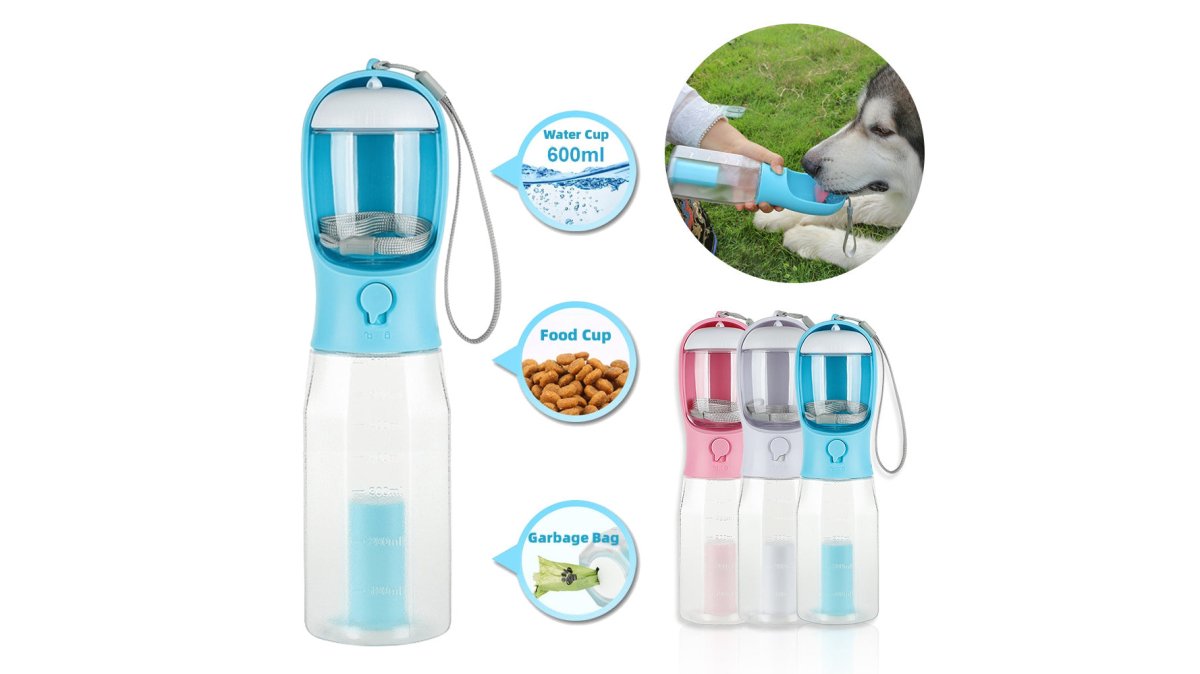
For longer outings, the Dog Water Cup 3-in-1 at $19.00 adds a built-in filtration system, a 100g food container, and a waste bag compartment. The lockable dispensing button controls flow so nothing spills on a hike.
Portable Cat Dog Water Bottle Food Feeder Drinker Poop Dispenser 3 In 1 →

Budget travelers can look at the Portable 3-in-1 Water Bottle at $8.00. It holds 600ml, includes a lanyard, and ships with a roll of waste bags.
Third-Party Certifications and Label Transparency
Third-party certifications are the fastest way to verify an eco-claim without a chemistry degree, but only if you know which label does what.
Textile and fiber certifications
- GOTS (Global Organic Textile Standard). Verifies organic fiber content and restricts the chemicals allowed in processing, including dyes and finishes. It applies to cotton, wool, and hemp bedding, blankets, and plush toys. If a product claims "organic cotton" without GOTS, the claim is unverified.
- OEKO-TEX Standard 100. Tests the finished article for harmful substances, including formaldehyde, heavy metals, and certain dyes. It is the most useful label for anything a pet sleeps on or mouths, because it tests the product as sold, not just the raw fiber.
- FSC (Forest Stewardship Council). Verifies that wood and paper come from responsibly managed forests. It matters for chew toys, cat scratchers, and paper-based litter, where the concern is both sourcing and any finish applied to the wood.
Plastic and material certifications
- FDA food-contact compliance. Indicates a material is cleared for direct food contact. For bowls, water bottles, and treat dispensers, this is the standard that matters most, because it covers leaching under normal use.
- BPA-free and phthalate-free callouts. These are self-declared unless tied to a testing body, so treat them as a starting point, not proof. Pair them with a recycling code of 1, 2, 4, or 5 for a stronger signal.
What each label does not cover
A GOTS label does not verify that a toy is chew-safe. An OEKO-TEX label does not verify durability. FSC does not verify that a finish is non-toxic. Certifications are narrow by design, so match the label to the risk.
How to verify a badge
- Find the certification body name on the label or listing, not just the logo.
- Search the body's public database for the brand or product. Most maintain searchable registries.
- Check the scope. A certificate for "cotton fabric" does not cover the plastic squeaker sewn inside it.
- Look for an expiration date. Certifications lapse, and an expired badge is not a current claim.
When a listing hides behind "eco-friendly" with no specifics, treat it as unverified. Ingredient transparency is the real signal. A brand confident in its materials will spell them out, the way our hydration picks list stainless steel and food-grade silicone by name.
Search the GOTS public certified supplier database
Budget-Friendly Non-Toxic DIY and End-of-Life Disposal
Two angles most guides skip: making your own safe supplies and disposing of pet products responsibly. Both stretch your budget and cut waste.
DIY options that cost little and stay safe:
- Frozen treat toys: Stuff a rubber toy with plain broth and freeze it.
- Cloth tug toys: Braid untreated cotton fabric scraps into a durable tug.
- Baking soda deodorizer: Sprinkle it on carpets, wait, then vacuum for a chemical-free freshener.
On disposal, the goal is waste reduction. Wash and repurpose sturdy toys, compost cotton and hemp items where your local program allows, and check whether your municipality recycles specific plastics. Compostable and biodegradable materials break down faster than synthetic ones, so choosing them upfront pays off at end of life.
Conclusion: Choosing the Best Non Toxic Pet Products for 2026
Sorting safe products from greenwashed ones takes effort, and the labels rarely make it easy. The payoff can be real: fewer chemicals around your pet, less waste, and gear that lasts.
At NextGen, we curate pet essentials built around verifiable materials. Our stainless steel water bottle uses food-grade silicone and corrosion-resistant steel. Our self-cleaning slicker brush keeps grooming gentle and simple. And our 3-in-1 travel cup bundles hydration, food, and cleanup into one leak-proof design.
Choose NextGen for pet products where the materials are named, not hidden.
Frequently Asked Questions
What should I look for when buying non toxic pet products?
Look for specific material claims: BPA-free, phthalate-free, and food-grade silicone or stainless steel. Avoid vague terms like 'natural' or 'eco-friendly' without proof. For toys, choose natural rubber or organic cotton over vinyl. For grooming, skip synthetic fragrances and parabens. Always read the ingredient list and verify claims through independent databases.
Are there specific certifications for non-toxic pet toys?
Yes, several third-party certifications help verify safety. OEKO-TEX certifies textiles free from harmful substances. These certifications mean an independent lab tested the product, not just the brand's claim.
How do I identify harmful chemicals in pet grooming products?
Check the label for synthetic fragrances, parabens, phthalates, and sulfates. Avoid ingredients like 'fragrance' (a catch-all), methylparaben, and propylparaben. Look for plant-based surfactants like coco-glucoside. For non-toxic pet grooming supplies, choose products with short ingredient lists and no artificial dyes. If a product claims 'natural' but lists synthetic preservatives, it's not truly non-toxic.
What are the best eco-friendly materials for pet bedding?
Organic cotton, hemp, and bamboo are top choices. They're grown without pesticides and are biodegradable. Natural rubber and recycled materials also work well for beds and mats. Avoid synthetic foams treated with flame retardants. Look for certifications like GOTS (Global Organic Textile Standard) to confirm organic content. These materials reduce your pet's toxic load and environmental impact.
Are natural pet products always safer than synthetic ones?
Not always. Some natural ingredients like essential oils can be toxic to pets, especially cats. Synthetic materials like food-grade silicone and stainless steel are safe and durable. The key is ingredient transparency and third-party testing. A product labeled 'natural' without certification can still contain harmful chemicals. Focus on specific safety claims (BPA-free, phthalate-free) rather than the natural label.