

Table of Contents
- Quick Comparison: Interactive Smart Toys for Dogs
- How to Choose Interactive Dog Toys for Mental Stimulation
- Automatic Treat Dispensing Dog Toys That Work While You're Away
- Benefits of Smart Toys for Dog Anxiety
- Motion-Activated and Rolling Ball Toys Under $10
- Safety, Materials, and Supervision Rules
- Cleaning, Maintenance, and Replacement Costs
- Conclusion: Pick the Right Toy for Your Dog
- Frequently Asked Questions
Last Updated: October 6, 2026
Quick Comparison: Interactive Smart Toys for Dogs
Interactive smart toys are battery-powered or rechargeable dog toys that respond to your dog's movement, touch, or a remote signal, turning solo playtime into active problem-solving.
Here is the short version, so you can skip the scrolling:
| Toy | Price | Power | Best For | Key Trait |
|---|---|---|---|---|
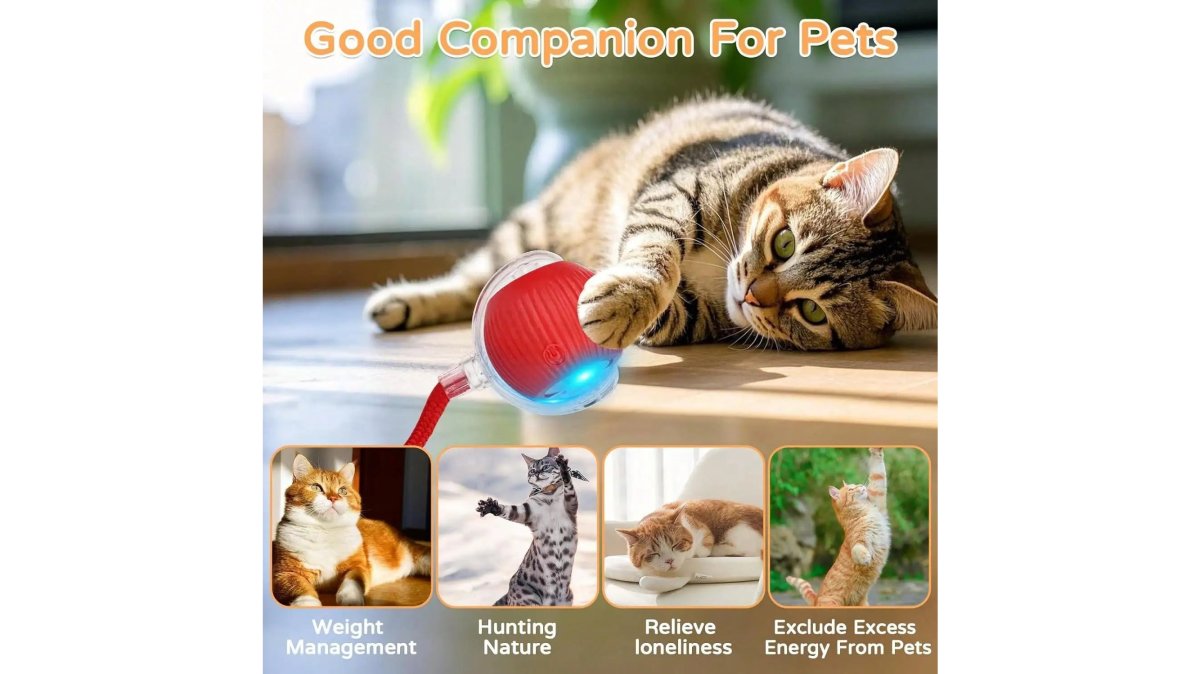
| Rechargeable Interactive Toy Ball with Tail | $8.75 | USB rechargeable | Dogs who chase and pounce | Faux tail, harness tie point |
| Automatic Rolling Ball with Faux Tail | $7.50 | Rechargeable, battery included | Independent play and training | Food-grade ABS shell, silicone wrap |
Both sit under $10, so you can test whether your dog engages with motion before spending more. The limitation: neither is a puzzle feeder, so they deliver movement and chase, not food rewards.

How to Choose Interactive Dog Toys for Mental Stimulation
Most shoppers pick a smart toy from a video of a dog going wild over it, then find their own dog indifferent or destructive. Choose on four variables: body size, age and life stage, chewing style, and how your dog prefers to earn a reward.
Start With Body Size, Not Breed
Breed labels are unreliable: a 12-pound terrier and a 12-pound mixed breed have the same jaw mechanics. Use weight and mouth size:
- Under 15 lb: choose toys roughly 1.5 to 2 inches across and under 4 oz. A heavy rolling ball can outrun a small dog and turn play into frustration.
- 15 to 40 lb: the 2 to 3 inch range works for most rolling balls and treat dispensers.
- Over 40 lb: look for 3 inches and up, and check shell thickness. A large dog can crack a thin ABS shell on the first hard bite.
The rule that matters more than any chart: if the whole toy fits behind your dog's back teeth, it is a choking risk. Hold it next to your dog's muzzle; if it disappears past the molars, size up.

Age and Life Stage Change the Toy, Not Just the Session
- Puppies under 6 months: soft silicone wraps over hard shells, 5 to 10 minute supervised sessions. Motion toys are fine; dispensers with small internal parts are not.
- Adult dogs 1 to 7 years: the full range works, including puzzle boards, roll-and-drop dispensers, and rechargeable motion balls.
- Senior dogs 8+: slower motion and lower-effort food rewards win. A ball at full speed on hardwood can startle stiff joints or fading eyesight. Look for a slow mode, or use a stationary puzzle board.
Chewing Style Decides What Survives
Dogs fall into three groups, and the group matters more than price:
- Nudgers and chasers: push toys with their nose, pounce, and lose interest when motion stops. Motion toys suit them, and they rarely destroy anything because they are not biting down.
- Mouthy chewers: bite hard and repeatedly. They need thick shells, no loose fabric, no exposed seams. A silicone-wrapped ball beats a plush squeaker, and neither should be left alone with a determined chewer.
- Problem-solvers: work at a toy until it gives up a reward. They need puzzle toys and treat dispensers, not just a rolling ball, which bores them within a week.
Unsure which group your dog is in? Watch what it does with a cardboard box. Paws and noses it: nudger. Shreds it: chewer. Flips it looking for a way in: problem-solver.
Match the Reward to the Dog
Smart toys deliver one of two payoffs: motion or food. Motion toys reward the chase; treat dispensers reward effort with calories. Some dogs work for motion alone; many will not. If your dog ignores a rolling ball after two minutes, the issue is usually the reward, not the toy.
A Quick Decision Path
- Weigh your dog and measure its muzzle. Rule out anything that fits behind the back teeth.
- Note its age. Puppies and seniors get gentler motion and simpler mechanisms.
- Watch one play session and label the chewing style.
- Decide whether your dog works for motion or food.
- Buy one toy that matches, not three that almost match.
Automatic Treat Dispensing Dog Toys That Work While You're Away
A treat dispenser keeps a dog occupied by making food the reward for effort: the dog solves something to eat.
Most designs fall into two families. Roll-and-drop toys tumble and release kibble through internal baffles as the dog pushes them.
Three rules make dispensers work better:
- Start easy. If your dog gives up in two minutes, the difficulty is wrong, not the dog.
- Use part of a meal, not extra treats, so you are not adding calories on top of dinner.
- Size the opening to your kibble. Too wide and everything falls out at once; too narrow and your dog loses interest.
For dogs home alone a full workday, a dispenser buys a stretch of focused activity, not eight hours of entertainment.
Benefits of Smart Toys for Dog Anxiety
Smart toys help anxious dogs by giving them a predictable job. Boredom and unsettled energy often look like anxiety: pacing, whining, chewing furniture, barking at nothing. A toy that requires attention redirects that energy into a task.
Motion toys work well for dogs who startle easily: the movement is repetitive and self-directed, and your dog controls when play starts and stops.
A few practical points:
- Introduce any new toy while you are home, not on the first day back at the office.
- Keep first sessions to a few minutes and end on a win.
- If your dog ignores the toy entirely, that is information, not failure. Some dogs need a food reward built in, and some never take to motion toys.
Motion-Activated and Rolling Ball Toys Under $10
Motion toys are the cheapest entry point, and two options in our collection land under $10.
1 Piece USB Rechargeable Interactive Toy Ball For Cats, Auto Electric Rolling →
The Automatic Rolling Ball with Faux Tail is $7.50 with the battery included. Its shell is food-grade ABS, and a soft silicone wrap quiets the roll and adds grip.
Neither is a treat dispenser, so if your dog only engages when food is involved, look at a puzzle feeder instead.
Safety, Materials, and Supervision Rules
No toy substitutes for supervision, especially anything with a battery. A few habits prevent most problems:
- Check the shell after every session. A cracked battery compartment means the toy comes out of rotation immediately.
- Match toy size to jaw size. Anything that fits entirely behind the back teeth is a choking risk.
- Skip rope, string, and long fabric tails for unsupervised play. They can wrap around a jaw or a leg.
Food-grade ABS and silicone wraps are common in this category because they resist biting and clean easily. That is a baseline, not a guarantee: a determined chewer can damage almost anything given time.
Cleaning, Maintenance, and Replacement Costs
The sticker price of a smart dog toy is the smallest number in the equation. Batteries, charging, treats, replacement parts, and realistic lifespan all add up, and most product pages do not mention any of them.
Cleaning Routine by Material
- Hard-shell ABS: wipe with a damp cloth and mild soap after outdoor play, then dry fully before charging or storing. Pay attention to the seam where the halves meet, where saliva and grit collect.
- Silicone wraps: they collect saliva and dirt in the grooves. Check weekly and scrub with a soft brush. Silicone holds odor, so a wrap that smells sour after washing is a sign to replace it.
- Puzzle boards and dispensers: rinse food-contact surfaces after every use. Kibble residue attracts ants and molds in humid weather. Check manufacturer guidance before dishwashing any part, because heat and water can compromise a sealed battery compartment.
Battery and Charging Costs
Rechargeable toys avoid disposable battery costs but still need a charging cycle:
- Charge out of your dog's reach and never leave a toy plugged in unattended. A chewed charging cable is a serious electrical hazard.
- Let the toy dry completely before it goes back on the charger.
- Rechargeable batteries lose capacity over time. A ball that ran 45 minutes when new may run 20 minutes after a year. That decline, not a cracked shell, often ends a rechargeable toy's useful life.
Treat and Kibble Costs
Treat dispensers only work if you keep feeding them. The cheapest way to run one is with part of your dog's regular kibble rather than training treats, which keeps calories flat and adds no cost. If you use training treats, expect to go through them faster than hand-fed training, because the toy dispenses on its own schedule.
Replacement Timeline and What Ends a Toy
| Item | Typical Lifespan | What Ends It |
|---|---|---|
| Hard-shell rolling ball | Months of regular play | Cracked shell, dead battery |
| Silicone-wrapped ball | Shorter with heavy chewers | Chewed wrap, exposed core |
| Puzzle feeder | Longer, plastic parts wear | Missing pieces, chewed sliders |
| Rechargeable battery | 1 to 2 years of regular use | Lost capacity, no longer holds a charge |
| Silicone wrap (replaceable) | Weeks to months | Tears, odor, chewing damage |
Two Habits That Stretch the Timeline
Store toys dry and out of direct sun. Heat degrades plastic and battery life, so a toy on a sunny windowsill fails sooner than one kept in a bin. Rotate rather than leaving one toy out all day, which spreads wear across your set.
The Real Cost Per Week
A $7.50 or $8.75 rolling ball that lasts a few months costs less per week than most chew treats, the strongest argument for keeping one in rotation. Add a dispenser and the math still favors toys over consumable chews, because the dispenser lasts longer and the treats you load it with are part of your dog's regular food. The category is cheap to enter and maintain as long as you buy for your dog's size and chewing style rather than the flashiest feature list.
Conclusion: Pick the Right Toy for Your Dog
The hard part is not finding a smart toy. It is matching the toy to the dog in front of you, and accepting that a chaser and a problem-solver need different purchases.
At NextGen, we stock both entry points under $10, plus the everyday gear that goes with them, from a portable 3-in-1 water bottle and food container for walks and road trips to a self-cleaning slicker brush for the coat your dog brings home from the park.

Choose the rolling ball that fits your dog's play style, add a dispenser if it needs a job to do, and rotate both.
Frequently Asked Questions
Are smart dog toys safe for unsupervised play?
Most interactive smart toys are safe for short unsupervised sessions, but check the toy for loose parts, exposed batteries, or torn silicone wraps before leaving your dog alone with it. The rechargeable rolling ball toys in this lineup use soft silicone wraps and food-grade ABS plastic, which handle moderate chewing. If your dog is an aggressive chewer, supervise play until you know how the toy holds up, and replace anything with cracks or exposed wiring.
What is the most mentally stimulating game for dogs?
Treat-dispensing and puzzle-style toys tend to work best because they reward problem-solving with food. Automatic treat dispensing dog toys release kibble or treats as your dog rolls, paws, or nudges the toy, which mimics foraging behavior. Pair that with a motion-activated ball for variety. Rotating between two or three toy types keeps the challenge fresh, and most dogs stay engaged longer when the reward is unpredictable rather than constant.
What can keep a dog entertained for hours?
No single toy holds a dog's attention for hours straight, but a rotation works well. Start with a treat-dispensing toy in the morning, switch to a motion-activated rolling ball midday, and finish with a puzzle or fetch session in the evening. The rolling ball toys here run on USB-rechargeable batteries and auto-roll on their own, so they buy you 20 to 30 minutes per session without you throwing anything.
How do I know these smart toys are durable enough for a heavy chewer?
Look at the materials listed on each product page. The rolling ball toys use food-grade ABS plastic with a soft silicone wrap that adds bite resistance. That handles moderate chewing, not power-chewing. If your dog destroys standard plush toys in a week, supervise the first few sessions, watch for cracks, and keep a spare on hand. No electronic toy survives a determined chewer left alone with it for hours.
Do smart toys actually help with dog anxiety?
They can help by giving your dog something to do instead of pacing or barking when you leave. The benefits of smart toys for dog anxiety come from mental stimulation and predictable routine, not from the toy itself being a cure. A treat-dispensing toy that releases food slowly can ease separation stress for mild cases. For severe anxiety, talk to your vet. Toys work best as part of a routine that includes exercise before you leave.